
Reaction to Fire VS Fire Resistance
Understanding the Two Key Fire Testing Criteria for Passive Firestop Systems
Understanding the Two Key Fire Testing Criteria for Passive Firestop Systems
In building design, especially when specifying fire protection systems for modern structures in Hong Kong, clear understanding of fire performance criteria is crucial. Architects and engineers often encounter two terms when working with international standards or project specifications — “reaction to fire” and “fire resistance.” While both are essential dimensions of passive fire safety, they address different aspects of performance and can easily be confused.
This article explains the difference in the context of international testing methods while connecting them to Hong Kong’s regulatory environment and common specification practices.

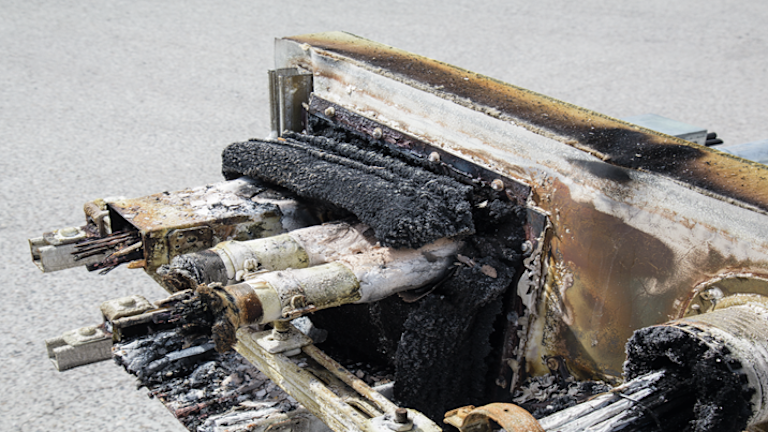
Figure 1: Firestop products and tests on fire resistance
Understanding Reaction to Fire
When a fire starts, materials with high combustibility can accelerate its spread. This is why it is important to use materials of limited combustibility within building components.
“Reaction to fire” testing measures how a construction material contributes to the development of a fire — essentially, it assesses how a product burns, including its heat release, smoke production, and potential for flaming droplets.
In Europe, this is defined by EN 13501-1: Fire classification of construction products and building elements, which assigns materials into classes (A1, A2, B, C, D, E and F). A1 and A2 indicate materials with very limited combustibility, while classes further down the scale show increasing levels of contribution to fire. Additional descriptors (s1–s3 for smoke and d0–d2 for droplets) provide more detail on performance.

Figure 2: Description of reaction to fire classifications
While Hong Kong follows its own fire safety codes — notably the Code of Practice for Fire Safety in Buildings 2011 (FS Code) and the Buildings Department’s acceptance testing regimes — international standards like EN 13501-1 are often referenced in global project specifications or in the evaluation of imported materials. Specifiers in Hong Kong should ensure that materials claiming European “reaction to fire” classifications have corresponding certificates or approvals recognized by local authorities or accredited testing bodies.
Understanding Fire Resistance
“Fire resistance,” by contrast, measures how long a system or assembly — such as a wall, floor, or firestop installation — can contain a fully developed fire and prevent heat transfer.
Fire resistance is tested based on two main criteria:
E – Integrity: The system’s ability to prevent passage of flames or hot gases.
I – Insulation: The system’s ability to prevent the temperature increase to the non-exposed side of a wall or floor. It is the limitation of heat radiation to an ambient temperature (not more than 140° C above ambient as an average measurement and no more than 180° C at any one location.

Figure 3: The two test criteria in EN1366-3 testing: integrity and insulation
Standard fire resistance durations — such as 30, 60, 90, and 120 minutes — indicate how long a tested system can maintain these performance levels under defined laboratory conditions (e.g., EN 1366-3 or equivalent fire resistance tests).
In Hong Kong, these principles are consistent with the general objectives of fire resisting construction under the FS Code, but local approval and project specific compliance must always be confirmed with the relevant authorities. Architects should ensure that tested system performance — including firestop configurations — corresponds to the required fire compartmentation design.
Putting It Together: Product vs. System Performance
The key difference can be summarized this way:
Reaction to fire is a material-oriented property (how the product itself behaves).
Fire resistance is a system-oriented property (whether the full assembly performs as a barrier).

Figure 4: A full-scale system test is conducted in a fire resistance test set up
A material that may not seem non-combustible can still form part of a tested, certified fire-resistant system when correctly selected and installed in accordance with the relevant test reports and approvals.
This article is for general technical information only and does not constitute legal or regulatory advice. Project specific compliance must be confirmed with the relevant authorities and professional consultants.
Supporting Safe Specification with Tested Systems
At Hilti, we understand that achieving code compliance and effective fire safety is not just about choosing individual materials — it’s about designing complete, tested, and approved systems that work together.
Through decades of R&D and testing across our global laboratories, Hilti provides firestop solutions that are tested to EN and ASTM standards, while also supporting local project compliance through documentation and technical advice prepared to support project teams in demonstrating compliance to the satisfaction of the relevant Hong Kong authorities, where applicable.
We are ready to support architects and engineers with detailed technical data, design software integration, and transparent compliance documentation — helping professionals make confident decisions that protect both people and property.
Explore how different firestop solutions can be applied into real life applications Fire Protection - HILTI Hong Kong.