
How Modular Construction, Digitalization, Green Building, and Smart Infrastructure Are Redefining Project Delivery and Sustainability in Hong Kong
Shaping Hong Kong’s Construction Future: Key Trends and Technologies in 2025
Hong Kong’s construction industry in 2025 stands at the crossroads of transformation, driven by rapid urbanization, ambitious government initiatives, and the pressing need for sustainability and efficiency. The sector is embracing a new era defined by modular construction, digitalization, green building, and smart infrastructure. These trends not only address local challenges—such as housing demand, labor shortages, and climate goals—but also position Hong Kong as a model for innovative urban development in Asia.
Modular Construction: Accelerating Delivery and Raising Standards
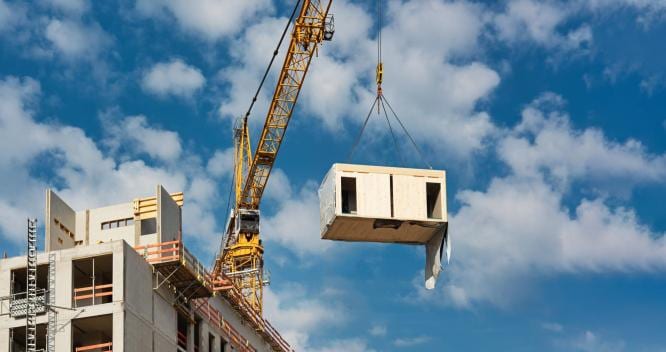
Modular Integrated Construction (MiC) has rapidly gained traction in Hong Kong, particularly in response to the city’s acute housing demand and the need for faster, higher-quality project delivery. The government’s commitment to constructing approximately 100,000 public housing units in the next five years has catalyzed the adoption of MiC, which involves the off-site prefabrication of volumetric modules for rapid on-site assembly. A flagship example is the Tung Chung Area 99 (TC99) public housing project, where one of five buildings is being constructed using MiC, marking the first use of this method for domestic flats in Hong Kong. The approach delivers significant improvements in construction speed, site safety, and quality control.
To maximize the benefits of modular construction, the industry is focusing on three core principles:
- Off-site Prefabrication: Shifting complex work to controlled factory environments.
- Cross-trade Integration: Coordinating multiple trades within modular units to streamline installation.
- Plug-and-Play Functionality: Enabling modules to be quickly connected on-site with minimal disruption.
Hilti’s modular support systems and prefabrication services are instrumental in this shift. By providing advanced, corrosion-resistant modularized supports and integrated design services, Hilti helps project teams optimize material use, reduce installation time, and improve coordination among trades. These solutions align with Hong Kong’s drive to enhance productivity and quality while addressing space constraints and evolving building codes.
Digitalization: BIM, IoT, and AI Transforming Construction
The digital revolution is reshaping every stage of the construction lifecycle in Hong Kong. The integration of Building Information Modelling (BIM), the Internet of Things (IoT), and Artificial Intelligence (AI) is unlocking new levels of efficiency, transparency, and safety.
- BIM is now central to project planning, design, and delivery. It enables value engineering, clash detection, and multi-discipline coordination before construction begins, reducing rework and material waste. On-site, BIM facilitates prefabrication, digital-to-field layout, and real-time documentation, while in the operational phase, it supports digital twinning for accurate as-built records and predictive maintenance.
- AI and IoT are increasingly embedded in smart building and infrastructure management. For instance, Hong Kong’s Electrical and Mechanical Services Department (EMSD) is piloting the integration of AI algorithms with BIM and Asset Management databases to create digital twins for optimizing chiller plant efficiency. The government’s establishment of the Hong Kong AI Research and Development Institute (AIRDI) and the AI Supercomputing Centre further accelerates the adoption of AI in construction, enabling advanced applications such as energy optimization and automated safety monitoring.
Hilti’s BIM-integrated design services and digital layout tools, such as the PLT 300, empower project teams to seamlessly transition from digital models to precise on-site execution. Advanced fastening and anchoring technologies—like the HST4 stud anchor system—are designed for compatibility with digital workflows, enabling automated torque control and installation data capture for enhanced quality assurance and compliance. These innovations support engineers and contractors in achieving higher productivity, reduced errors, and improved safety.
Green Building and Sustainability: Towards Carbon Neutrality
With buildings accounting for over 50% of Hong Kong’s carbon emissions, sustainability is at the forefront of the city’s construction agenda. The government’s Green City initiative and the Hong Kong Green Building Council’s (HKGBC) efforts are accelerating the adoption of green technologies and practices, with the goal of achieving carbon neutrality by 2050.
Key developments include:
- BEAM Plus Certification: The expansion of Hong Kong’s green building rating system, including pilot projects in the Greater Bay Area, drives the adoption of energy-efficient designs and materials.
- Green Finance and Disclosure: The launch of the Roadmap on Sustainability Disclosure and alignment with international standards (ISSB) incentivize sustainable investment and transparent reporting.
- Energy-saving Retrofits: Technical guidelines and inter-regional cooperation are promoting large-scale energy retrofits and carbon reduction in existing buildings.
Hilti supports sustainability through hardware solutions and digital tools that enable material optimization, waste reduction, and lifecycle management. The PROFIS Engineering Suite, for example, helps engineers design structural connections with a lower carbon footprint, while modular systems and prefabrication services minimize site waste and improve resource efficiency. Hilti’s commitment to net-zero emissions is reflected in its transparent CO₂ data management and support for clients’ sustainability goals.
Smart Infrastructure: Building a Connected, Resilient City
Hong Kong’s infrastructure development is increasingly “infrastructure-led,” focusing on smart, green, and resilient systems. Major investments in transport, electricity, and housing are driving the sector, with projects such as the Tung Chung Line Extension, Northern Link, and strategic road upgrades scheduled through 2030.
Smart city initiatives, as outlined in the Smart City Blueprint, emphasize:
- Smart Mobility: Autonomous shuttle buses equipped with AI and 5G are being piloted to enhance public transport safety, efficiency, and sustainability.
- Integrated Digital Platforms: City-wide BIM, IoT, and AI integration support predictive maintenance, real-time monitoring, and optimized asset management.
- Resilient Infrastructure: Advanced digital planning tools and modular construction methods are being deployed to ensure infrastructure can adapt to changing demands and climate risks.
Hilti’s end-to-end digital solutions and safety-enhancing products play a vital role in supporting smart infrastructure. From integrated project delivery services to advanced firestop systems and digital documentation tools, Hilti enables project teams to meet the highest standards of safety, efficiency, and future readiness.
Partnering for the Future
The transformation of Hong Kong’s construction industry in 2025 is underpinned by close collaboration between government, industry, and technology partners. As a trusted partner, Hilti offers a comprehensive suite of solutions—from modular support systems and BIM-integrated design services to advanced fastening, digital layout, and safety technologies—that empower engineers, contractors, and project teams to successfully adopt these trends.
