
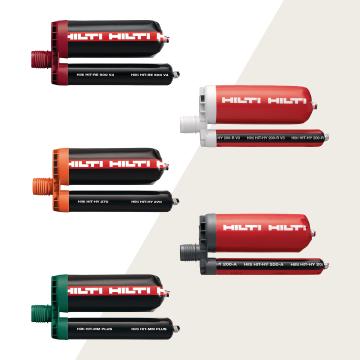
HILTI Chemical Adhesives
Selecting the appropriate adhesive anchor is critical to the success of any fastening application. The choice depends heavily on specific site conditions, installation requirements, and the expected load performance.
Adhesive anchors primarily come in two categories: fast cure and slow cure, each with distinct advantages and ideal use cases. This article explores the characteristics of these adhesives, how to choose between them, and how advanced design tools like PROFIS Engineering can simplify and optimize your selections.
Advantages and Disadvantages of Fast and Slow Cure Adhesive Anchors

Choosing the Right Adhesive Anchor: Situational Considerations
The decision between fast cure and slow cure adhesives must be carefully matched to the installation parameters. Selecting an inappropriate adhesive can impair anchor performance or installation efficiency.
- Example-1:
- Using a fast cure adhesive for a large, deep bar installation can be problematic because the injection process may take longer than the adhesive’s working time. This can prevent full embedment of the anchor, reducing load capacity and potentially compromising safety.
- Example-2:
- Environmental factors—such as cold temperatures—may slow adhesive curing, making fast cure products a better choice, whereas high ambient temperatures might favor slow cure adhesives to avoid rapid setting.
Designing Post-Installed Adhesive Anchors with PROFIS Engineering
Selecting the optimal adhesive anchor can be challenging, especially with diverse project demands. Hilti’s PROFIS Engineering software is designed to simplify this process:
Key Features:
- Simulates load capacities, installation parameters, and curing times based on project specifics.
- Offers recommendations on anchor types best suited for your conditions, saving time and enhancing safety.
