
Your best Partner to Enable Value Engineering
AI-Inspired Software Feature for Productivity in Design
Recent advancements in AI and Machine Learning have sparked widespread interest and adoption, shaping how complex problems are approached across various industries. Recognizing the potential of these technologies, Hilti has tailored its approach to meet the specific needs of structural engineers by incorporating a sophisticated mathematical optimization method into the PROFIS Engineering Anchoring-to-concrete module. This method, inspired by the efficiency of AI-driven solutions, enhances our software's capability to optimize multi-anchor connections. By integrating this advanced algorithm, PROFIS Engineering sets a new standard in anchor design productivity by effectively eliminating the traditional manual iterations that slow down the design process.

At the heart of this innovation is a powerful optimization tool that tackles complex design challenges by swiftly evaluating various factors—such as material strength, plate geometry, and anchor placement.
One of the key benefits of this approach is its potential to enhance productivity among structural engineering firms. By eliminating the iterative steps, engineers can increase their overall workflow efficiency. This translates to a reduction in design time and helps projects adhere to stringent deadlines without compromising on quality or accuracy.
Furthermore, this algorithm empowers engineers to make more cost-effective and sustainable decisions. By optimizing the utilization and placement of anchors, the methodology supports the design of structures that meet and exceed performance requirements while minimizing over-design and reducing overall project
costs. This aligns with the growing industry focus on sustainability, enabling engineers to contribute positively to constructing environmentally friendly structures.
Getting Started In Profis Engineering

To start, access PROFIS Engineering at https://profisengineering.hilti.com; after log-in, start a calculation by selecting the first module displayed on the Homepage, Anchoring-to- concrete.
Once inside the module, click the third tab down along the left side indicated by a light bulb called “Smart Design.”

Here, toggle between two modes of “Smart Design”:
1) Manual: Users will get a recommendation of anchors, and
2) Auto (exclusive for premium users): Users can utilize the maximum benefits from this new functionality. Note that all button options on the left tab will be disabled with this selection, everything needed will be in this mode (read further).
Anchor Preferences and Selection:
Following the input of Categories and Applications, the anchor calculation software will suggest up to three suitable anchors tailored to the application selection. Engineers have the flexibility to choose from these recommendations or select others based on their preferences. For further insight, simply click the 'i' icon to understand the basis of each recommendation, including technical approvals and practical applicability.

Fun Fact! Hilti’s recommended anchors for our Smart Anchor Design comes from structural engineers interviewed around the world! We asked structural engineers which projects they spend the most time on, what baseplates they commonly design on those projects, and what anchors they typically prefer for those connections. Our anchor experts then matched each application with the specific requirements that could best meet those needs.
Enter Profile and Concrete Inputs:


Once the preferred anchor(s) are selected, the user can include the minimum required parameters necessary to perform an anchor calculation. These inputs should come as a result of the structure design and they are: profile type, concrete properties (including geometry), and loads. At this point, the can select “Search Solutions” and Smart Design will use all the information provided to list options for the anchor layout and baseplate area.
Adjust Anchor Utilization Preferences:

The user has additional input options by clicking on “Advanced Input” at the bottom of the left panel to fully leverage the capabilities of Smart Design.
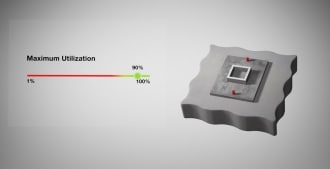
This allows the desired level of utilization be adjusted with just a few clicks, aiming for rates as close to 100% as the engineer is comfortable with. High utilization rates helps with value engineering to reduce costs and accelerate the installation process. Adjusting this setting ensures the design is both resource-efficient and cost-effective.
Additionally, the inputs listed under “Construction Options” can help narrow down the number of calculated solutions, resulting in faster outcomes.
Filter & Sort to Prioritize Solutions:

After all preferred inputs are entered, the “Search Solutions” button can be clicked, and several solutions will be displayed. The count of results at the bottom will be displayed as calculated and sorted from smallest baseplate area to largest.
There may be more than 100 solutions available, making the final selection a bit overwhelming. This selection process is simplified with convenient ways to filter and sort. The sorting option provides an option to organize solutions by utilization, baseplate size, number of anchors or embedment depth. The filter option is accessed by clicking this icon  , enabling solutions be eliminated based on design parameters or preferences.
After selecting a solution, more information and results can be reviewed, calculation report printed, and the construction documents updated.
Conclusion
Integrating this advanced optimization algorithm into PROFIS Engineering represents a leap forward in structural engineering. It promises structural engineers a powerful tool for designing optimal multi-anchor connections, enhancing productivity, enabling the creation of more cost-effective and sustainable solutions, and ultimately, giving further peace of mind by aiding in the selection of the right anchor for the right application.
Explore how Smart Design in PROFIS Engineering from Hilti Group can revolutionize the anchor calculations workflow!
